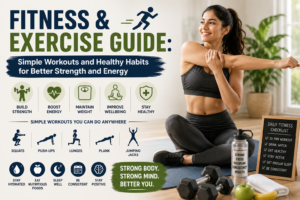
Whether you’re an athlete, a weekend warrior, or just someone who wants to stay active, injury prevention is crucial. One of the most effective ways to protect your muscles, joints, and ligaments is through stretching and mobility exercises. These practices enhance flexibility, improve range of motion, and reduce the risk of strains, sprains, and other injuries.
This guide covers practical stretching and mobility exercises that anyone can do at home or before workouts. By incorporating them into your routine, you’ll move better, feel more energetic, and stay injury-free.
Why Stretching and Mobility Are Important
Many injuries occur due to tight muscles, limited joint movement, or improper posture. Stretching and mobility work helps to:
- Increase flexibility and range of motion
- Improve joint stability and muscle balance
- Reduce muscle stiffness and soreness
- Enhance overall performance in daily activities and workouts
- Prevent common injuries like hamstring pulls, lower back strains, and shoulder issues
Even a few minutes per day can make a significant difference in long-term health and injury prevention.
Types of Stretching
Understanding the different types of stretching helps you use the right technique for your goals:
1. Static Stretching
- Definition: Holding a stretch at the end of the range of motion for 15–60 seconds.
- Best for: Cooling down after workouts or improving overall flexibility.
- Example: Hamstring stretch—sit with legs extended and gently reach toward your toes.
2. Dynamic Stretching
- Definition: Controlled movements through the full range of motion, often used as a warm-up.
- Best for: Preparing muscles and joints for activity.
- Example: Leg swings, arm circles, or torso twists before running or strength training.
3. PNF Stretching (Proprioceptive Neuromuscular Facilitation)
- Definition: Stretching combined with isometric contraction of the muscle.
- Best for: Advanced flexibility gains and rehabilitation under guidance.
- Example: Partner-assisted hamstring stretch where you push against resistance, then relax.
Key Mobility Exercises
Mobility exercises improve joint movement and control, which is critical for preventing injuries:
1. Hip Circles
- Stand with feet hip-width apart, hands on hips.
- Rotate hips in a circular motion clockwise, then counterclockwise.
- Benefits: Loosens hip joints, improves squat depth, reduces lower back stress.
2. Shoulder Rolls
- Roll shoulders forward for 10–15 reps, then backward.
- Benefits: Reduces tension in neck and shoulders, prevents upper back stiffness, enhances range of motion.
3. Cat-Cow Stretch
- Start on hands and knees.
- Arch your back (cat), then dip your spine while lifting head and tailbone (cow).
- Benefits: Increases spine mobility, reduces back pain, prepares for lifting or bending movements.
4. Ankle Circles
- Lift one foot off the ground and rotate the ankle clockwise and counterclockwise.
- Benefits: Improves ankle stability, reduces risk of sprains, and enhances balance.
5. Thoracic Spine Rotations
- Lie on your side, knees bent at 90 degrees.
- Open your top arm across your body, rotating the upper back while keeping hips stable.
- Benefits: Improves upper back mobility, reduces shoulder and neck strain.
Full-Body Stretching Routine to Prevent Injuries
Here’s a daily 10–15 minute routine you can do to maintain flexibility and mobility:
- Neck Stretch: Tilt head side to side, 15–20 seconds each.
- Shoulder Rolls: 10 forward, 10 backward.
- Cat-Cow Stretch: 10 repetitions.
- Hip Circles: 10 clockwise, 10 counterclockwise.
- Hamstring Stretch: Hold 20–30 seconds per leg.
- Quadriceps Stretch: Hold 20–30 seconds per leg.
- Calf Stretch: Stand facing a wall, press heel down for 20–30 seconds per leg.
- Thoracic Spine Rotation: 8–10 reps per side.
- Ankle Circles: 10 reps per foot.
- Standing Side Stretch: Reach arms overhead and lean side to side, 10 reps.
Perform this daily or post-workout to reduce stiffness, improve posture, and protect joints from injury.
Tips for Safe Stretching and Mobility
- Warm up first: Light movement or cardio increases blood flow before stretching.
- Avoid bouncing: Use smooth, controlled movements to prevent muscle tears.
- Listen to your body: Stretch to the point of mild tension, not pain.
- Breathe deeply: Helps muscles relax and increases effectiveness.
- Stay consistent: Daily practice provides long-term benefits.
Consistency is more important than duration; even 10 minutes per day can prevent injuries and improve mobility over time.
Common Mistakes to Avoid
- Skipping mobility work: Leads to stiffness and higher injury risk.
- Holding stretches too long or too forcefully: Can strain muscles or ligaments.
- Ignoring smaller joints: Ankles, wrists, and shoulders often need more attention than expected.
- Neglecting post-workout stretching: Muscles tighten after exercise, increasing injury risk.
By being mindful and deliberate, you can maximize the benefits of stretching and mobility safely.
Key Takeaways
- Stretching and mobility exercises reduce injury risk and improve overall movement quality.
- Daily practice enhances flexibility, balance, posture, and joint stability.
- Use dynamic stretching before workouts and static stretches afterward.
- Include mobility exercises for hips, spine, shoulders, and ankles.
- Short, consistent routines are more effective than occasional long sessions.
Even a 10–15 minute daily routine can make a significant difference in preventing injuries and improving long-term physical health.
Conclusion
Incorporating stretching and mobility exercises into your daily routine is one of the simplest and most effective ways to stay active, prevent injuries, and feel better in your body.
Start small, focus on consistency, and target all major joints and muscles. Over time, these exercises will become a habit that protects your body, improves performance, and enhances overall well-being.
Remember: movement is medicine, and taking care of your muscles and joints today prevents injuries tomorrow.