
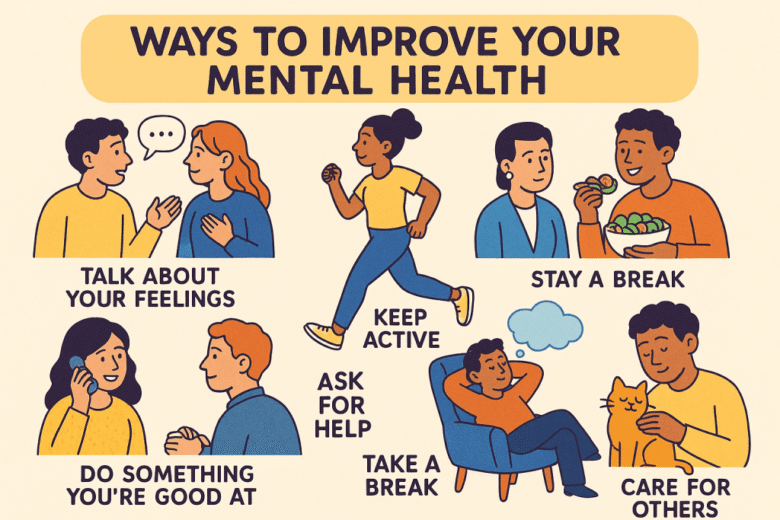
Mental health is just as important as physical health, yet it is often ignored until problems become serious. It affects how you think, feel, behave, and handle everyday stress. Good mental health does not mean being happy all the time—it means being able to manage emotions, cope with challenges, and maintain balance in life.
Modern life brings constant pressure from work, social expectations, finances, and digital overload. Over time, these pressures can affect mood, focus, sleep, and overall wellbeing.
The good news is that mental health can be improved through simple daily habits. You do not need complicated routines—small consistent actions can make a real difference.
This guide explains practical mental health strategies, self-care habits, and emotional wellbeing tips that you can apply in everyday life.
Table of Contents
- What Mental Health Means
- Why Mental Health Is Important
- Common Signs of Poor Mental Health
- Daily Habits for Better Mental Wellbeing
- Stress Management Techniques
- Emotional Balance and Self-Awareness
- The Role of Sleep in Mental Health
- Physical Activity and Mental Wellness
- Digital Habits and Mental Health
- Mental Health Comparison Table
- Common Mental Health Mistakes
- FAQ
- Conclusion
1. What Mental Health Means
Mental health refers to your emotional, psychological, and social wellbeing.
It affects:
- How you think and process information
- How you handle stress
- How you relate to others
- How you make decisions
- How you respond to challenges
Good mental health helps you function effectively in daily life.
2. Why Mental Health Is Important
Mental health influences every part of life, including physical health.
Benefits of good mental wellbeing:
- Better focus and productivity
- Improved relationships
- More emotional stability
- Better sleep quality
- Lower stress levels
- Improved decision-making
When mental health improves, overall life quality improves too.
3. Common Signs of Poor Mental Health
Recognizing early signs is important.
Common indicators:
- Constant stress or worry
- Lack of motivation
- Trouble sleeping
- Irritability or mood changes
- Difficulty concentrating
- Feeling emotionally drained
These signs should not be ignored if they persist.
4. Daily Habits for Better Mental Wellbeing
Small habits can support mental balance.
1. Start Your Day Calmly
Avoid rushing immediately into stress or social media.
2. Practice Self-Reflection
Spend a few minutes thinking about your emotions.
3. Take Short Breaks
Breaks help reset mental energy during the day.
4. Maintain a Simple Routine
Structure helps reduce mental overload.
5. Connect with Supportive People
Healthy communication improves emotional wellbeing.
5. Stress Management Techniques
Stress is part of life, but it can be managed.
Helpful methods:
- Deep breathing exercises
- Light physical activity
- Writing thoughts in a journal
- Spending time outdoors
- Listening to calming sounds
Managing stress regularly prevents emotional burnout.
6. Emotional Balance and Self-Awareness
Emotional balance means understanding and managing your feelings.
Key practices:
- Pause before reacting
- Identify emotional triggers
- Accept emotions without judgment
- Practice patience in difficult situations
Self-awareness improves emotional control over time.
7. The Role of Sleep in Mental Health
Sleep and mental health are strongly connected.
Poor sleep may lead to:
- Irritability
- Anxiety
- Low energy
- Poor concentration
Better sleep habits:
- Keep a consistent sleep schedule
- Avoid screens before bed
- Create a quiet sleeping environment
Good sleep supports emotional stability.
8. Physical Activity and Mental Wellness
Exercise is one of the most effective natural mental health boosters.
Benefits:
- Reduces stress hormones
- Improves mood
- Increases energy
- Enhances focus
Even simple activities like walking can help improve mental wellbeing.
9. Digital Habits and Mental Health
Excessive screen time can increase mental fatigue.
Common problems:
- Overthinking from social media
- Reduced attention span
- Sleep disruption
- Information overload
Better habits:
- Limit screen time
- Avoid constant notifications
- Take digital breaks
- Reduce social media comparison
Healthy digital balance supports mental clarity.
10. Mental Health Comparison Table
| Habit | Benefit | Difficulty Level | Impact |
|---|---|---|---|
| Sleep Routine | Emotional stability | Moderate | Very High |
| Exercise | Mood improvement | Moderate | High |
| Journaling | Self-awareness | Easy | High |
| Digital Breaks | Reduced stress | Moderate | High |
| Social Connection | Emotional support | Easy | High |
11. Common Mental Health Mistakes
1. Ignoring Emotional Stress
Small stress can grow over time if ignored.
2. Overloading Yourself
Too many responsibilities increase burnout risk.
3. Comparing Yourself to Others
This often affects self-esteem negatively.
4. Poor Sleep Habits
Sleep loss directly impacts mental health.
5. Avoiding Emotional Expression
Suppressing feelings can increase stress.
Simple Daily Mental Health Routine
| Time | Habit |
|---|---|
| Morning | Calm start and reflection |
| Afternoon | Short break and movement |
| Evening | Reduce screen time |
| Night | Relaxation and sleep preparation |
FAQ: Mental Health
1. What is mental health in simple words?
It is your emotional and psychological wellbeing and how you handle life situations.
2. How can I improve my mental health naturally?
Healthy habits like sleep, exercise, stress management, and social connection help.
3. Does exercise help mental health?
Yes, physical activity can improve mood and reduce stress.
4. Can social media affect mental health?
Excessive use may increase stress, comparison, and anxiety.
5. When should I seek help?
If stress, sadness, or anxiety becomes constant or affects daily life.
Conclusion
Mental health is a key part of overall wellbeing and affects how you live, think, and interact with the world. It does not require perfection or complicated methods—small daily habits can significantly improve emotional balance over time.
By managing stress, improving sleep, staying active, and maintaining healthy digital habits, you can build a stronger and more stable mindset.
Taking care of your mental health is not a one-time task—it is an ongoing part of a healthy and balanced life.