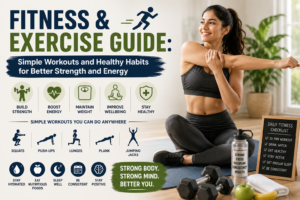

I’ll never forget my first serious attempt at exercising regularly. I was full of motivation but quickly overwhelmed by confusing advice, crowded gyms, and endless workout plans. Over time, I realized that fitness isn’t about complicated routines or spending hours at the gym—it’s about consistent movement, smart planning, and listening to your body.
This guide will help anyone, whether a complete beginner or someone returning to exercise, to develop an effective, sustainable fitness routine. I’ll share practical tips, real-life strategies, and actionable advice to improve strength, endurance, flexibility, and overall well-being.
Why Fitness and Exercise Are Important
- Improves physical health: Strengthens muscles, bones, and cardiovascular system.
- Boosts mental health: Reduces stress, anxiety, and depression.
- Increases energy: Regular activity improves stamina and focus.
- Supports weight management: Helps burn calories and maintain a healthy body composition.
- Enhances longevity: Active lifestyles are linked to a longer, healthier life.
Experience Insight: I noticed my mood and focus improved dramatically once I committed to 30 minutes of daily activity, even with a busy schedule.
Step 1: Understanding Your Fitness Goals
Before starting any routine, define your goals clearly:
1. Weight Management
- Aim: Lose fat or maintain healthy body weight.
- Focus: Cardio, resistance training, and calorie management.
2. Strength Building
- Aim: Increase muscle mass and functional strength.
- Focus: Weightlifting, bodyweight exercises, progressive overload.
3. Flexibility and Mobility
- Aim: Improve range of motion and prevent injuries.
- Focus: Stretching, yoga, pilates, dynamic movements.
4. General Health and Wellness
- Aim: Increase overall fitness, energy, and mental health.
- Focus: Balanced combination of cardio, strength, and flexibility.
Experience Tip: I started with general fitness goals—improving energy and posture—before adding specific weightlifting targets.
Step 2: Components of a Balanced Fitness Routine
1. Cardiovascular Exercise
- Improves heart and lung health.
- Examples: brisk walking, jogging, cycling, swimming, or dancing.
- Recommendation: 150 minutes per week of moderate-intensity cardio or 75 minutes of vigorous activity.
Quick Tip: Even short 10–15 minute walks after meals can improve cardiovascular health and digestion.
2. Strength Training
- Builds muscle, improves metabolism, and strengthens bones.
- Examples: resistance bands, dumbbells, bodyweight exercises, weight machines.
- Recommendation: 2–3 times per week for all major muscle groups.
Experience Insight: I started with push-ups, squats, and dumbbell rows at home and gradually added more challenging weights—consistency mattered more than intensity at first.
3. Flexibility and Mobility
- Reduces injury risk and improves posture.
- Examples: yoga, dynamic stretching, foam rolling.
- Tip: Incorporate stretching after workouts and on rest days.
4. Core Training
- Core strength improves balance, stability, and daily function.
- Examples: planks, bridges, bicycle crunches.
Experience Tip: Adding core exercises to my routine reduced lower back discomfort from long hours of sitting.
Step 3: Designing Your Weekly Fitness Routine
Beginner Routine Example
| Day | Activity |
|---|---|
| Monday | 20 min brisk walk + bodyweight strength training |
| Tuesday | 15 min yoga or stretching |
| Wednesday | 25 min cycling or jogging |
| Thursday | Rest or light stretching |
| Friday | 20 min strength training + core exercises |
| Saturday | Outdoor activity: hiking, swimming, or sports |
| Sunday | Rest or active recovery (walk or gentle yoga) |
Experience Insight: Starting with manageable sessions prevented burnout and made it easy to stay consistent.
Step 4: Warm-Up and Cool-Down
Warm-Up
- Prepares muscles and joints for exercise.
- Examples: 5–10 minutes light cardio, dynamic stretches.
- Experience Insight: I used to skip warm-ups and often felt stiff or sore; adding a simple warm-up prevented injuries.
Cool-Down
- Helps muscles recover and reduces soreness.
- Examples: 5–10 minutes of slow cardio + static stretching.
Step 5: Progressive Overload
- Gradually increase intensity, weight, or duration to continue improving fitness.
- Examples: adding 5 pounds to dumbbells weekly, increasing running distance slowly.
Experience Tip: Incremental progress prevented injuries and built strength sustainably.
Step 6: Recovery and Rest
- Rest days are crucial for muscle repair and energy restoration.
- Sleep 7–8 hours per night to support recovery.
- Include active recovery like walking, light yoga, or stretching.
Step 7: Nutrition for Fitness
- Protein: Supports muscle repair and growth. Sources: eggs, chicken, tofu, fish.
- Carbohydrates: Provide energy for workouts. Sources: oats, brown rice, fruits, vegetables.
- Healthy Fats: Support hormonal health. Sources: nuts, seeds, avocado, olive oil.
- Hydration: Drink 6–8 glasses of water daily; increase on active days.
Experience Insight: Fueling workouts with balanced meals improved my energy and performance significantly.
Step 8: Staying Motivated
1. Set Realistic Goals
- Break large goals into achievable milestones.
- Example: “Run 1 km without stopping” before aiming for 5 km.
2. Track Progress
- Use fitness apps, journals, or wearable trackers.
- Seeing progress boosts motivation.
3. Make it Enjoyable
- Choose activities you genuinely like: dancing, hiking, or group classes.
- Variety prevents boredom.
4. Find Support
- Workout with friends, join a class, or online fitness communities.
- Accountability increases consistency.
Step 9: Home Workouts vs Gym Workouts
Home Workouts
- Convenient, flexible, and cost-effective.
- Use bodyweight exercises, resistance bands, or small dumbbells.
- Space-efficient and time-saving.
Gym Workouts
- Access to heavier weights and machines.
- Group classes provide structure and motivation.
- Professional trainers can guide technique.
Experience Tip: I started with home workouts for convenience and later incorporated gym sessions for variety and progressive strength training.
Step 10: Overcoming Common Challenges
- Time Constraints: Short, 10–20 minute workouts still provide benefits.
- Lack of Motivation: Focus on consistency over intensity; small wins matter.
- Plateauing: Introduce new exercises or increase intensity.
- Injuries: Listen to your body, prioritize form, and allow rest.
Step 11: Benefits Beyond Physical Health
- Improved mood and reduced anxiety.
- Better sleep quality.
- Increased confidence and self-esteem.
- Enhanced cognitive function and focus.
- Stronger immune system and energy levels.
Experience Insight: Regular exercise transformed my mental state; even stressful days felt more manageable.
Step 12: Tips for Long-Term Success
- Make fitness a non-negotiable part of your schedule.
- Combine cardio, strength, and flexibility for overall health.
- Listen to your body and adjust intensity as needed.
- Celebrate milestones to maintain motivation.
- Focus on sustainable habits rather than quick fixes.
- Continue learning about new exercises, nutrition, and recovery methods.
Conclusion
Fitness and exercise are about creating habits that support your body, mind, and long-term well-being. By understanding your goals, incorporating balanced routines, fueling your body properly, and maintaining consistency, anyone can achieve a healthier, stronger, and more energetic life.
Key Takeaways:
- Define your fitness goals clearly.
- Include cardio, strength, flexibility, and core exercises.
- Warm-up, cool-down, and rest are essential.
- Fuel your body with balanced nutrition and hydration.
- Track progress and adjust routines gradually.
- Focus on consistency, enjoyment, and long-term habits.
Start small today—a short walk, a few push-ups, or a stretching session—and gradually build a routine that fits your life. Over time, the benefits compound, transforming your health, energy, and confidence.