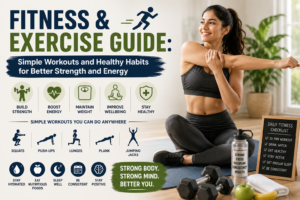
Starting a daily exercise routine can feel intimidating, especially if you’re new to fitness or have a busy schedule. The thought of long workouts, complex equipment, or strict regimens often leads to procrastination and frustration.
The good news is that you don’t need to overcomplicate exercise to see results. With a few practical strategies, you can build a consistent, manageable daily routine that fits your lifestyle, boosts energy, and improves overall health—without feeling stressed or overwhelmed.
This guide will show you how to start small, stay motivated, and make exercise a sustainable part of your life.
Why Consistency Matters More Than Intensity
Many beginners focus on long, intense workouts but struggle to stick with them. Consistency is far more important than intensity when forming a lasting habit:
- Even 10–20 minutes daily of movement is effective for health.
- Regular activity improves energy, mood, and sleep.
- Small, consistent workouts are easier to sustain than occasional intense sessions.
The goal is to create a routine that becomes natural and stress-free, rather than a source of pressure.
Step 1: Set Realistic Goals
Clear, achievable goals are the foundation of any exercise routine.
- Start small: Aim for 10–15 minutes per day if you’re a beginner.
- Focus on consistency: Your first goal should be “exercise daily,” not “run a marathon.”
- Track progress: Use a journal or fitness app to note activity and improvements.
- Celebrate milestones: Even small achievements, like 7 consecutive days of movement, deserve recognition.
By setting manageable goals, exercise becomes empowering rather than overwhelming.
Step 2: Choose Activities You Enjoy
Exercise shouldn’t feel like a punishment. Selecting activities you enjoy increases motivation:
- Walking or jogging: Simple and requires no equipment.
- Bodyweight exercises: Squats, push-ups, lunges, planks.
- Dance workouts: Fun and uplifting while burning calories.
- Yoga or stretching: Improves flexibility, posture, and mental calm.
- Light resistance training: Using bands or small weights at home.
When you enjoy your activity, it’s easier to stay consistent and look forward to daily movement.
Step 3: Start Small and Gradually Increase
Beginners often feel overwhelmed by the idea of long workouts. Start small and scale up gradually:
- Begin with 5–10 minutes of movement per session.
- Add 5 more minutes each week or incorporate an extra exercise.
- Alternate between low- and moderate-intensity workouts to prevent burnout.
- Listen to your body: it’s okay to have rest days when needed.
This approach ensures that exercise feels achievable and prevents discouragement.
Step 4: Make Exercise Convenient
Convenience is key to forming a daily habit. Reduce barriers by:
- Designating a workout space at home, even if small.
- Keeping equipment accessible: Yoga mat, resistance bands, dumbbells.
- Scheduling workouts: Treat them like appointments in your calendar.
- Prepping ahead: Lay out clothes and shoes the night before.
When exercise is easy to do, you’re more likely to stick with it consistently.
Step 5: Combine Movement with Daily Life
You don’t always need formal workouts to stay active. Integrate movement into your routine:
- Take the stairs instead of the elevator.
- Walk or cycle for short errands instead of driving.
- Do bodyweight exercises during TV time.
- Stand or stretch during work breaks.
These small activities add up and help you build a lifestyle of consistent movement.
Step 6: Focus on Enjoyable, Short Workouts
Short workouts can be just as effective as longer sessions when done regularly:
- 10-minute HIIT (High-Intensity Interval Training) for cardio and calorie burn.
- 15–20 minutes of yoga or Pilates for flexibility and core strength.
- 5–10 minutes of bodyweight circuit (squats, lunges, push-ups, planks).
- Walking or jogging around your neighborhood.
Short, manageable workouts reduce the feeling of being overwhelmed and make exercise a daily habit.
Step 7: Use Motivation and Accountability
Maintaining a routine is easier with motivation and accountability:
- Workout with a friend or family member virtually or in person.
- Use fitness apps to track progress and set reminders.
- Set small rewards for consistency, like a relaxing bath or a healthy treat.
- Join online communities for support and encouragement.
When you feel supported, exercise becomes fun and motivating rather than a chore.
Step 8: Prioritize Recovery and Self-Care
Overwhelmed beginners often skip rest, which can lead to burnout:
- Incorporate rest days to allow muscles to recover.
- Include stretching or yoga to improve flexibility and prevent soreness.
- Stay hydrated and eat nourishing foods to fuel workouts and recovery.
- Focus on quality sleep, which enhances performance and energy.
Taking care of your body ensures your routine is sustainable long-term.
Step 9: Track Progress and Celebrate Wins
Tracking progress keeps motivation high:
- Note the number of days you exercised each week.
- Track time, reps, or distance for each workout.
- Celebrate milestones, no matter how small: completing your first week, improving reps, or noticing increased energy.
Recognizing progress builds confidence and reinforces the habit of daily exercise.
Step 10: Stay Flexible and Kind to Yourself
Life is unpredictable. Missing a day or needing a lighter session is normal:
- Adjust workouts based on your energy and schedule.
- Focus on consistency over perfection.
- Remember, any movement is better than none.
- Reframe exercise as a self-care practice, not a punishment.
By staying flexible and compassionate, you avoid feeling overwhelmed and build a routine that lasts.
Sample Beginner Daily Routine
Morning (10 minutes)
- 2 minutes warm-up (march in place)
- 10 squats
- 10 push-ups (knee or wall if needed)
- 10 lunges per leg
- 20-second plank
Evening (optional 10–15 minutes)
- 5-minute walk
- 5 minutes stretching or yoga
This routine takes 20–25 minutes total and covers strength, cardio, and flexibility—perfect for beginners starting small.
Key Takeaways
- Start small, manageable workouts rather than long, overwhelming sessions.
- Choose activities you enjoy to increase motivation.
- Incorporate movement into daily life for consistency.
- Use tracking, accountability, and rewards to stay motivated.
- Rest, recover, and stay flexible to maintain a sustainable routine.
Even short, daily exercises add up, improving energy, mood, strength, and overall health over time.
Conclusion
Starting a daily exercise routine doesn’t have to feel overwhelming. By setting realistic goals, choosing enjoyable activities, starting small, and staying consistent, beginners can create a sustainable habit that fits their lifestyle.
Focus on progress, not perfection, and celebrate every step forward. Over time, these simple daily movements will become an effortless part of your life, boosting energy, strength, and confidence.
Remember: fitness is a journey, not a race, and starting small is the key to long-term success.