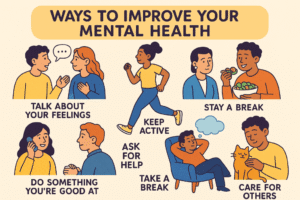
Anxiety is one of the most common mental health challenges today. Whether it’s the pressure of work, personal responsibilities, or uncertainty about the future, feeling anxious can impact your sleep, concentration, and overall well-being. While professional support is essential for severe anxiety, there are many natural, practical techniques you can practice at home to manage stress and calm your mind.
This guide explores simple, science-backed strategies that help reduce anxiety naturally, improve mental resilience, and support a more peaceful daily life.
Understanding Anxiety
Anxiety is a normal response to stress, but chronic anxiety can become overwhelming. Symptoms include:
- Persistent worry or fear
- Racing thoughts and difficulty concentrating
- Muscle tension or headaches
- Rapid heartbeat or shortness of breath
- Sleep disturbances
Understanding your anxiety triggers is the first step toward managing them effectively. Recognizing patterns allows you to implement targeted strategies to reduce stress before it escalates.
1. Mindful Breathing Exercises
Mindful breathing is a cornerstone of natural anxiety management. By focusing on your breath, you activate the parasympathetic nervous system, which promotes relaxation.
How to Practice:
- Sit or lie down in a comfortable position.
- Close your eyes and inhale slowly through your nose for a count of 4.
- Hold for 1–2 seconds, then exhale gently for a count of 6.
- Repeat for 5–10 minutes, focusing entirely on your breath.
Tips:
- When your mind wanders, gently bring it back to your breathing.
- Pair with calming music or nature sounds for enhanced relaxation.
Benefits:
- Reduces heart rate and cortisol levels
- Calms racing thoughts
- Provides instant stress relief
2. Progressive Muscle Relaxation (PMR)
Progressive muscle relaxation is a natural technique that helps release physical tension caused by anxiety.
How to Practice:
- Sit or lie comfortably.
- Start with your toes, tensing muscles for 5 seconds, then releasing.
- Move gradually up through your calves, thighs, abdomen, arms, shoulders, and face.
- Pay attention to the feeling of relaxation after each release.
Tips:
- Practice before bedtime to reduce anxiety-related sleep disturbances.
- Combine with deep breathing for maximum effect.
Benefits:
- Reduces muscle tension
- Promotes mental calm
- Improves sleep quality
3. Journaling for Anxiety Relief
Writing down your thoughts and worries helps externalize anxious feelings, giving your mind a break.
How to Practice:
- Spend 10–15 minutes each day writing about what’s on your mind.
- Focus on your feelings and triggers without judgment.
- Include solutions, reflections, or gratitude lists to shift focus.
Benefits:
- Reduces overthinking
- Enhances self-awareness
- Improves emotional regulation
Pro Tip: Combine journaling with mindful breathing for a soothing routine.
4. Gentle Exercise at Home
Physical activity releases endorphins, which act as natural mood boosters. Even short, gentle exercises can reduce anxiety significantly.
Recommended Activities:
- Yoga or stretching routines
- Walking indoors or around your neighborhood
- Light strength exercises or bodyweight workouts
Tips:
- Aim for 20–30 minutes daily.
- Focus on movements and sensations to practice mindful exercise.
Benefits:
- Reduces stress hormones
- Improves sleep and energy
- Supports overall mental and physical health
5. Mindfulness Meditation
Mindfulness meditation encourages you to observe thoughts and emotions without judgment, reducing anxious reactions.
How to Practice:
- Sit quietly in a comfortable position.
- Focus on your breathing, bodily sensations, or a simple mantra.
- Acknowledge thoughts without getting attached and gently return focus to your breath.
- Start with 5–10 minutes daily, gradually increasing duration.
Tips:
- Use guided meditation apps for structured support.
- Meditate at the same time each day to build a habit.
Benefits:
- Reduces rumination and worry
- Enhances emotional resilience
- Improves focus and clarity
6. Visualization and Guided Imagery
Visualization helps your brain experience calm and safety, counteracting anxious thoughts.
How to Practice:
- Close your eyes and take deep breaths.
- Imagine a peaceful place: a beach, forest, or mountain.
- Engage all senses—hear the sounds, feel the textures, smell the air.
- Spend 5–10 minutes immersed in this mental space.
Tips:
- Use calming background sounds to enhance immersion.
- Practice before stressful events to maintain composure.
Benefits:
- Lowers stress hormone levels
- Promotes relaxation
- Strengthens mental resilience
7. Limit Stimulants and Support Nutrition
Certain foods and beverages can influence anxiety levels. Reducing stimulants and focusing on a balanced diet supports a calmer mind.
Tips:
- Limit caffeine and energy drinks, especially in the afternoon.
- Avoid excessive sugar and processed foods.
- Include anxiety-reducing foods like leafy greens, nuts, whole grains, and omega-3 rich foods (salmon, chia seeds).
- Stay hydrated throughout the day.
Benefits:
- Stabilizes mood and energy
- Supports brain function and neurotransmitter balance
- Reduces anxiety triggers linked to diet
Pro Tip: Prepare balanced meals in advance to avoid skipped meals and blood sugar dips that increase anxiety.
8. Aromatherapy for Relaxation
Certain scents have calming effects that help reduce anxious feelings.
Recommended Essential Oils:
- Lavender
- Chamomile
- Bergamot
- Ylang-ylang
How to Use:
- Diffuse oils in your living space.
- Add a few drops to a warm bath.
- Apply diluted oils to pulse points for a soothing effect.
Benefits:
- Promotes relaxation
- Supports sleep
- Reduces physiological stress symptoms
Pro Tip: Combine aromatherapy with deep breathing or meditation for maximum impact.
9. Limit Screen Time and Digital Overload
Constant notifications, social media, and news exposure can increase anxiety levels.
Tips:
- Set boundaries for social media and news consumption.
- Schedule screen-free periods, especially before bedtime.
- Practice mindful use of technology—focus on one task at a time.
Benefits:
- Reduces information overload
- Supports mental clarity
- Improves sleep and emotional balance
Pro Tip: Keep your phone out of reach during meditation or relaxation exercises to avoid interruptions.
10. Establish a Daily Routine
A structured daily routine provides predictability and stability, reducing anxiety triggers.
How to Practice:
- Wake up and go to bed at consistent times.
- Schedule meals, exercise, and relaxation breaks.
- Allocate specific times for work, leisure, and mindfulness practices.
- Include small enjoyable activities daily to boost mood.
Benefits:
- Reduces uncertainty-driven stress
- Improves time management and focus
- Supports mental well-being
Pro Tip: Incorporate a short morning or evening routine that includes journaling, mindfulness, or gentle exercise.
Key Takeaways
- Anxiety is natural, but consistent practice of natural stress-reduction techniques can improve daily mental health.
- Techniques include mindful breathing, journaling, meditation, gentle exercise, visualization, aromatherapy, routine planning, and dietary adjustments.
- Start small: even 5–10 minutes of mindful practice per day can create noticeable relief.
- Combining multiple strategies enhances results, creating a calm, balanced, and focused mindset.
Final Thoughts
Managing anxiety naturally at home is possible with simple, consistent practices. By incorporating mindful breathing, journaling, gentle exercise, meditation, and routine adjustments, you can calm your mind, regain focus, and improve emotional resilience.
Start with one or two techniques today—like mindful breathing or journaling—and gradually add others. Over time, these practices will become a natural part of your daily life, giving you the tools to reduce anxiety, enhance focus, and enjoy a greater sense of calm and control.