Fitness is not only about building muscles or losing weight. Regular exercise plays a major role in improving energy, mental health, strength, sleep quality, and overall wellness. Even small amounts of physical activity can make a noticeable difference in daily life.
Many people avoid exercise because they think fitness requires expensive gym memberships, complicated workout plans, or intense routines. In reality, sustainable fitness often starts with simple habits that fit naturally into your lifestyle.
The biggest challenge for beginners is consistency. Motivation comes and goes, but building realistic exercise habits creates long-term results.
This guide explains practical fitness and exercise basics, beginner-friendly workouts, health benefits, and common mistakes to avoid.
Table of Contents
- What Fitness Really Means
- Why Regular Exercise Matters
- Main Types of Exercise
- Benefits of Fitness and Physical Activity
- Beginner-Friendly Workout Ideas
- Home Workouts vs Gym Workouts
- Importance of Warm-Up and Recovery
- Nutrition and Exercise Connection
- Fitness Routine Tips for Beginners
- Fitness Comparison Table
- Common Exercise Mistakes
- FAQ
- Conclusion
1. What Fitness Really Means
Fitness refers to your body’s ability to perform physical activities efficiently while maintaining good health and energy levels.
It includes:
- Strength
- Endurance
- Flexibility
- Balance
- Cardiovascular health
Fitness is about improving how your body functions, not only appearance.
2. Why Regular Exercise Matters
Physical activity benefits both body and mind.
Benefits of regular exercise:
- Improved heart health
- Better energy levels
- Stronger muscles and bones
- Better sleep quality
- Reduced stress
- Improved mood and confidence
Exercise also helps support long-term physical and mental health.
3. Main Types of Exercise
Different exercises improve different areas of fitness.
1. Cardio Exercise
Cardio improves heart and lung health.
Examples:
- Walking
- Running
- Cycling
- Jump rope
2. Strength Training
Helps build muscle and improve body strength.
Examples:
- Push-ups
- Squats
- Weight lifting
- Resistance bands
3. Flexibility Training
Improves movement and reduces stiffness.
Examples:
- Stretching
- Yoga
- Mobility exercises
4. Balance Exercises
Helps improve coordination and stability.
Especially useful for:
- Older adults
- Injury prevention
4. Benefits of Fitness and Physical Activity
Physical Benefits
| Benefit | How Exercise Helps |
|---|---|
| Heart Health | Improves circulation |
| Weight Management | Burns calories |
| Muscle Strength | Improves body support |
| Flexibility | Better movement |
| Bone Health | Supports bone density |
Mental Benefits
Exercise also supports mental wellbeing.
Benefits include:
- Reduced stress
- Improved mood
- Better focus
- Increased confidence
Physical activity often improves emotional balance naturally.
5. Beginner-Friendly Workout Ideas
Starting simple is usually more sustainable.
Walking Routine
One of the easiest and safest forms of exercise.
Beginner goal:
20–30 minutes daily.
Bodyweight Exercises
No equipment needed.
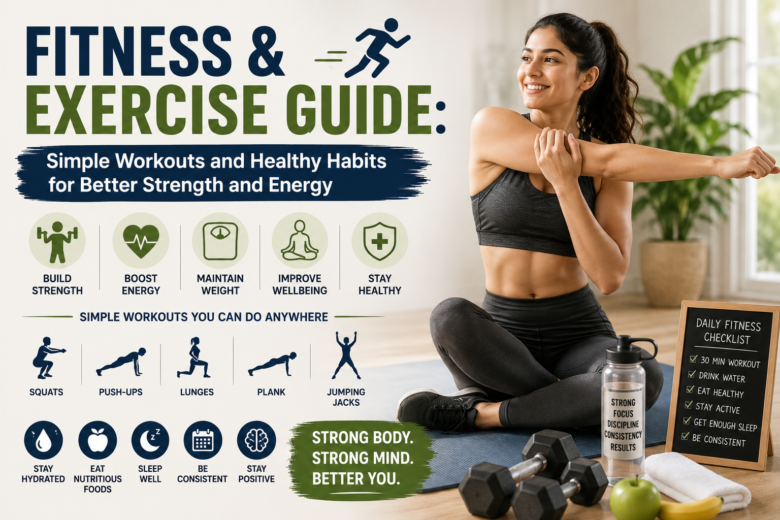
Basic exercises:
- Squats
- Push-ups
- Lunges
- Planks
Home Stretching
Improves flexibility and posture.
Light Cardio Sessions
Short beginner-friendly cardio workouts help build endurance gradually.
6. Home Workouts vs Gym Workouts
| Feature | Home Workouts | Gym Workouts |
|---|---|---|
| Cost | Low | Higher |
| Convenience | Very High | Moderate |
| Equipment Access | Limited | Wide variety |
| Privacy | High | Lower |
| Motivation | Self-driven | Environment helps |
Both options can be effective depending on personal preference.
7. Importance of Warm-Up and Recovery
Skipping recovery often causes injuries and fatigue.
Warm-Up Benefits
- Prepares muscles
- Improves circulation
- Reduces injury risk
Simple warm-up:
- Light jogging
- Arm circles
- Dynamic stretching
Recovery Matters Too
Recovery helps muscles repair properly.
Helpful recovery habits:
- Sleep properly
- Stay hydrated
- Stretch lightly
- Rest when needed
8. Nutrition and Exercise Connection
Exercise works best with proper nutrition.
Important nutrition basics:
- Eat enough protein
- Stay hydrated
- Include healthy carbohydrates
- Avoid excessive processed foods
Nutrition supports energy, recovery, and performance.
9. Fitness Routine Tips for Beginners
Start Small
Avoid extreme routines early.
Focus on Consistency
Regular moderate exercise is better than occasional intense workouts.
Track Progress
Simple tracking improves motivation.
Listen to Your Body
Rest when necessary to avoid overtraining.
Make Exercise Enjoyable
Choose activities you genuinely enjoy.
10. Fitness Comparison Table
| Exercise Type | Main Benefit | Difficulty | Equipment Needed |
|---|---|---|---|
| Walking | Heart health | Easy | None |
| Strength Training | Muscle growth | Moderate | Optional |
| Yoga | Flexibility and balance | Easy-Moderate | Minimal |
| Running | Endurance | Moderate | Shoes |
| Cycling | Cardio fitness | Moderate | Bicycle |
11. Common Exercise Mistakes
1. Starting Too Intensely
Often leads to burnout or injury.
2. Skipping Warm-Ups
Increases injury risk.
3. Inconsistent Workouts
Progress depends on regular activity.
4. Ignoring Recovery
Rest is part of fitness improvement.
5. Comparing Yourself to Others
Fitness progress is personal.
Simple Beginner Weekly Fitness Plan
| Day | Activity |
|---|---|
| Monday | Walking + stretching |
| Tuesday | Bodyweight exercises |
| Wednesday | Light cardio |
| Thursday | Rest or yoga |
| Friday | Strength exercises |
| Saturday | Walking or cycling |
| Sunday | Recovery and stretching |
FAQ: Fitness & Exercise
1. What is the best exercise for beginners?
Walking and simple bodyweight exercises are excellent starting points.
2. How often should I exercise weekly?
Regular moderate activity several days weekly is generally beneficial.
3. Do I need a gym to get fit?
No, home workouts can be very effective.
4. How long should workouts last?
Even 20–30 minutes can provide health benefits.
5. Is exercise good for mental health?
Yes, physical activity often helps reduce stress and improve mood.
Conclusion
Fitness and exercise are not about perfection or extreme training. They are about building healthier habits that improve strength, energy, confidence, and overall wellness over time.
The best workout routine is one that fits realistically into your life and can be maintained consistently. Whether you prefer walking, home workouts, stretching, or gym training, regular movement is one of the most valuable investments you can make in your health.
Start simple, stay consistent, and focus on long-term progress rather than quick results.