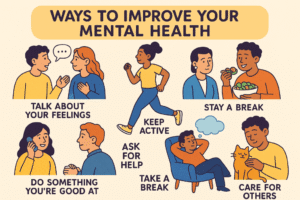
Stress is a common part of modern life, from tight work deadlines to personal challenges. While some stress is unavoidable, chronic stress can negatively impact your mental health, sleep, immune system, and overall well-being. Practicing mindfulness offers a powerful way to manage stress, improve focus, and cultivate inner calm.
Mindfulness is the practice of paying attention to the present moment without judgment. It helps you observe thoughts and emotions without becoming overwhelmed by them. Incorporating simple mindfulness exercises into your daily routine can make a significant difference in your stress levels, emotional balance, and overall health.
This guide introduces 10 practical mindfulness exercises you can easily integrate into your life, along with tips to make them effective and enjoyable.
Understanding Mindfulness and Its Benefits
Mindfulness is more than meditation; it’s a mindset that helps you respond to life’s challenges with clarity and calm. Benefits of mindfulness include:
- Reduced anxiety and stress
- Improved focus, concentration, and decision-making
- Enhanced emotional regulation and resilience
- Better sleep quality
- Greater sense of overall well-being
By practicing mindfulness daily, you train your mind to pause, observe, and respond rather than react impulsively to stressful situations.
1. Mindful Breathing
Mindful breathing is one of the simplest yet most effective mindfulness exercises. It helps anchor your attention and calm your nervous system.
How to Practice:
- Sit or lie down in a comfortable position.
- Close your eyes and focus on your breathing.
- Inhale slowly through your nose for a count of 4.
- Hold for 1–2 seconds.
- Exhale gently through your mouth for a count of 6.
- Repeat for 5–10 minutes.
Tips:
- Notice how the breath feels in your nose, chest, and abdomen.
- When your mind wanders, gently bring attention back to your breath.
Benefits:
- Reduces heart rate and cortisol levels
- Enhances mental clarity
- Provides instant stress relief
2. Body Scan Meditation
The body scan helps you connect with your physical sensations and release tension. It’s particularly helpful for stress-related muscle tightness.
How to Practice:
- Lie down or sit comfortably.
- Close your eyes and take a few deep breaths.
- Slowly focus on each part of your body, starting from your toes and moving up to your head.
- Notice any tension, discomfort, or warmth without judgment.
- Breathe into tight areas, imagining them relaxing with each exhale.
Tips:
- Use a guided audio meditation if you are new to body scans.
- Practice for 10–20 minutes daily.
Benefits:
- Releases physical tension
- Increases body awareness
- Reduces anxiety and promotes relaxation
3. Mindful Walking
Walking can be a moving meditation when practiced mindfully. It’s perfect for people who find sitting meditation challenging.
How to Practice:
- Choose a quiet place or walk slowly in nature.
- Focus on each step, feeling your feet touch the ground.
- Notice the rhythm of your walking and the movement of your legs.
- Observe your surroundings: sounds, sights, smells, and sensations.
- If your mind drifts, gently bring attention back to your walk.
Tips:
- Start with a 10-minute walk and gradually increase the duration.
- Practice mindful walking during breaks at work for quick stress relief.
Benefits:
- Combines physical exercise with mindfulness
- Reduces stress hormones
- Improves focus and energy levels
4. Mindful Eating
Mindful eating helps you enjoy food fully while reducing stress and emotional eating.
How to Practice:
- Eat slowly and without distractions (phones, TV, or computers).
- Observe the color, texture, and aroma of your food.
- Take small bites and chew thoroughly.
- Notice the taste and sensation with each bite.
- Check in with your hunger and fullness cues.
Tips:
- Practice mindful eating at least once a day for maximum impact.
- Avoid multitasking during meals to truly focus on the experience.
Benefits:
- Improves digestion and nutrient absorption
- Reduces overeating caused by stress
- Encourages gratitude and presence
5. Progressive Muscle Relaxation
This technique combines mindfulness with tension release and is excellent for reducing physical stress symptoms.
How to Practice:
- Sit or lie down comfortably.
- Starting with your feet, tense each muscle group for 5 seconds.
- Slowly release the tension and notice the difference.
- Move up through your calves, thighs, abdomen, arms, shoulders, and face.
- Focus on the sensation of relaxation in each area.
Tips:
- Practice before bedtime to improve sleep quality.
- Pair with slow breathing for maximum relaxation.
Benefits:
- Reduces muscle tension and stress
- Improves body awareness
- Supports better sleep and relaxation
6. Guided Meditation
Guided meditation provides structure and helps beginners focus their minds. Many apps, videos, and audio recordings are available.
How to Practice:
- Find a quiet, comfortable spot to sit or lie down.
- Play a guided meditation focusing on stress reduction, relaxation, or mindfulness.
- Follow the instructions, focusing on breathing, sensations, or visualization.
- Practice daily for 10–20 minutes.
Tips:
- Experiment with different guided meditations to find what resonates.
- Use headphones to block external distractions.
Benefits:
- Reduces stress and anxiety
- Increases mindfulness skills
- Helps build a consistent meditation habit
7. Visualization and Mental Imagery
Visualization helps your mind and body relax by imagining calming, stress-free scenarios.
How to Practice:
- Close your eyes and take deep breaths.
- Visualize a peaceful place—a beach, forest, or mountain.
- Engage all your senses: hear waves, feel the breeze, smell flowers.
- Spend 5–10 minutes immersed in this mental imagery.
Tips:
- Use this exercise when feeling overwhelmed or anxious.
- Pair with mindful breathing for deeper relaxation.
Benefits:
- Reduces cortisol levels
- Promotes a sense of calm and safety
- Enhances creativity and mental clarity
8. Mindful Journaling
Journaling with mindfulness helps process emotions, clarify thoughts, and reduce mental clutter.
How to Practice:
- Set aside 10–15 minutes daily.
- Write about your thoughts, feelings, and experiences without judgment.
- Reflect on stressors and explore solutions or coping strategies.
- Include gratitude journaling by listing things you are thankful for.
Tips:
- Keep a dedicated notebook for mindfulness journaling.
- Focus on observation rather than judgment or critique.
Benefits:
- Reduces anxiety and mental stress
- Improves self-awareness and emotional regulation
- Enhances gratitude and positivity
9. Mindful Stretching or Yoga
Gentle stretching or yoga combined with mindfulness relieves physical tension and calms the mind.
How to Practice:
- Start with simple stretches or beginner yoga poses.
- Focus on breathing and body sensations with each movement.
- Avoid rushing; move slowly and intentionally.
- End with a few minutes of savasana (lying down relaxation) focusing on breath.
Tips:
- Practice in the morning to set a calm tone for the day.
- Use online beginner yoga classes for guidance.
Benefits:
- Reduces muscle tension and stiffness
- Enhances flexibility and balance
- Promotes relaxation and mental clarity
10. Mindful Pause Technique
The mindful pause is a quick exercise you can use anytime during your day to reset your mind.
How to Practice:
- Stop what you’re doing and take a few deep breaths.
- Observe your thoughts, emotions, and physical sensations.
- Accept them without judgment and gently release tension.
- Take one mindful action, like drinking water slowly or noticing your surroundings.
Tips:
- Use this exercise before meetings, stressful calls, or transitions.
- Even 1–2 minutes can improve focus and reduce tension.
Benefits:
- Reduces stress response immediately
- Improves attention and decision-making
- Enhances emotional resilience
Key Takeaways
- Mindfulness helps reduce stress, improve focus, and enhance overall well-being.
- Daily mindfulness practice doesn’t require hours of meditation—short exercises like mindful breathing, walking, or pauses can make a significant difference.
- Combining mindfulness with healthy habits such as sleep, exercise, and nutrition amplifies stress reduction.
- Consistency is key: even 5–10 minutes of mindfulness daily creates long-term benefits.
Final Thoughts
Incorporating mindfulness into your daily life is a simple yet powerful way to combat stress and improve your mental health. By practicing these 10 exercises—mindful breathing, body scans, walking, eating, stretching, journaling, and visualization—you can cultivate calm, focus, and resilience, even in a busy lifestyle.
Start with one exercise today, gradually adding others, and notice how your stress levels, mood, and overall well-being improve over time. Mindfulness is a lifelong skill that rewards consistent practice with a calmer, more centered life.